Most of us feel perfectly healthy, eating well, sleeping fine, and going about our days. And that’s usually great news. But when it comes to the liver, feeling fine isn’t always the full story. Hepatitis is often called a silent condition because it can quietly affect the liver for years before any symptoms appear.
That’s why awareness matters. This isn’t meant to alarm you, just a gentle reminder that a simple checkup can catch what silence hides, long before it becomes a problem.
What Exactly Is Hepatitis, and Why Does It Matter So Much
It simply means inflammation of the liver. It can come from viruses, heavy alcohol use, certain medications, or autoimmune conditions where the body attacks its own liver tissue. The five main viral types, hepatitis A, B, C, D, and E, spread in different ways, from contaminated food and water to blood and body fluids.
Here’s what makes it such a serious public health concern:
- It’s the second leading infectious cause of death worldwide, killing roughly as many people each year as tuberculosis, the second leading infectious cause of death globally, with 1.3 million deaths per year, the same as tuberculosis, a top infectious killer.
- Hepatitis B and C together caused an estimated 1.3 million deaths from cirrhosis and liver cancer in 2024.
- Hundreds of millions of people are living with chronic hepatitis right now, many without knowing it. WHO estimates that 287 million people were living with chronic hepatitis B or C infection in 2024.
Why Hepatitis Is Called a Silent Disease
Most people picture illness as something obvious: fever, pain, exhaustion that stops you in your tracks. Hepatitis rarely works that way, especially in its chronic forms.
Someone can carry hepatitis B or C for a decade or more with:
- Mild fatigue they blame on work stress
- Occasional nausea dismissed as a bad meal
- No symptoms at all
By the time jaundice, abdominal swelling, or confusion appear, the liver may already have scarring, known as cirrhosis. That’s why hepatitis deserves more attention than it usually gets. It’s not that people ignore obvious warning signs; it’s that hepatitis often doesn’t give any.
The “Healthy Enough” Trap
A lot of people skip screenings because they feel healthy. Fair enough, that’s a reasonable assumption most of the time. But it breaks that logic.
You can:
- Exercise regularly and still carry hepatitis B from birth
- Eat clean and still have hepatitis C from a decades-old blood transfusion or shared needle exposure
- Look and feel perfectly normal while liver inflammation quietly progresses
This is the real wake-up call buried in the topic of hepatitis. Feeling fine isn’t the same as being fine.
Who Should Actually Be Thinking About Hepatitis
Hepatitis isn’t reserved for a narrow risk group. It touches far more people than most assume.
You should consider a screening conversation if you:
- Were born between 1945 and 1965 (higher baseline hepatitis C risk in this age group)
- Received a blood transfusion or organ transplant before 1992
- Work in healthcare or have occupational exposure to blood
- Have a family member with hepatitis B or C
- Drinking alcohol regularly, which compounds liver stress alongside viral hepatitis
- Were born to a mother with hepatitis B
Prevention Is Simpler Than People Expect
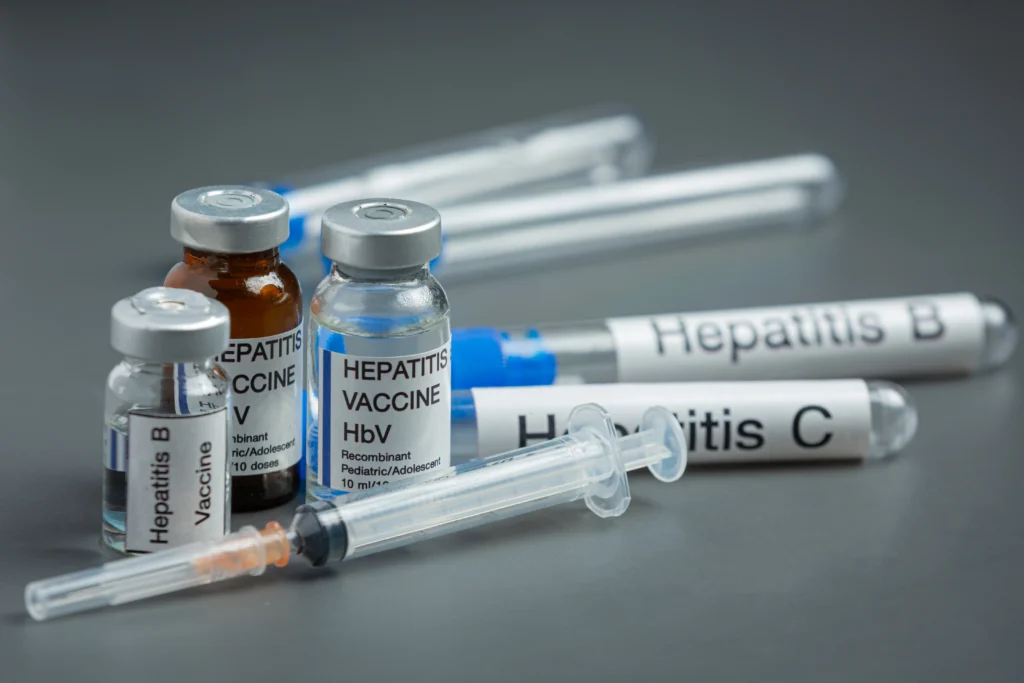
Here’s some genuinely good news: hepatitis is largely preventable and increasingly treatable.
- Hepatitis A and B have effective vaccines. A single birth-dose vaccine can prevent the vast majority of hepatitis B infections in newborns. A birth dose of the hepatitis B vaccine prevents 95% of acute and chronic infections.
- Hepatitis C has no vaccine yet, but modern antiviral treatments cure the majority of cases within two to three months.
- Practical daily habits matter too: avoid sharing needles or personal items like razors, be cautious with tattoo and piercing hygiene, and moderate alcohol intake.
Why Regular Screening Changes the Outcome
Catching hepatitis early is the difference between a manageable condition and a life-altering one. Detected in its early stages, hepatitis B and C can often be controlled or cured before serious liver damage sets in. Left undiagnosed, both can progress silently toward cirrhosis or liver cancer.
A simple blood test can check for hepatitis exposure or infection. It’s quick, it’s not invasive, and it can genuinely change the trajectory of your health. If you haven’t been screened, or it’s been years since your last liver panel, that’s worth changing sooner rather than later.
Your Next Step Starts Here
Hepatitis is a wake-up call precisely because it asks so little of you in return for so much protection: one test, one vaccine, one honest conversation with a specialist. That’s a small trade for peace of mind about your liver health.
Schedule a consultation today and take the screening step that hepatitis often doesn’t give you the chance to take on your own.
Frequently Asked Questions
Which hepatitis is not curable?
Hepatitis B is not curable; once chronic, antiviral medicines can control the virus but rarely eliminate it. Hepatitis D, which only occurs alongside hepatitis B, is likewise not curable, while hepatitis C is now curable in most cases.
What are the early symptoms of hepatitis?
Early hepatitis symptoms include fatigue, mild fever, nausea, loss of appetite, and pain in the upper right abdomen. Dark urine, pale stools, and yellowing of the eyes or skin (jaundice) usually appear a little later.
What is the difference between Hep A & B?
Hepatitis A spreads through contaminated food or water and almost always clears on its own within weeks. Hepatitis B spreads through blood, sexual contact, or mother-to-child transmission, and can become a lifelong chronic infection that damages the liver.
How do you catch hepatitis?
Hepatitis A and E are caught by consuming food or water contaminated with infected stool. Hepatitis B, C, and D are caught through infected blood, shared needles, unprotected sex, or transmission from mother to baby during birth.